
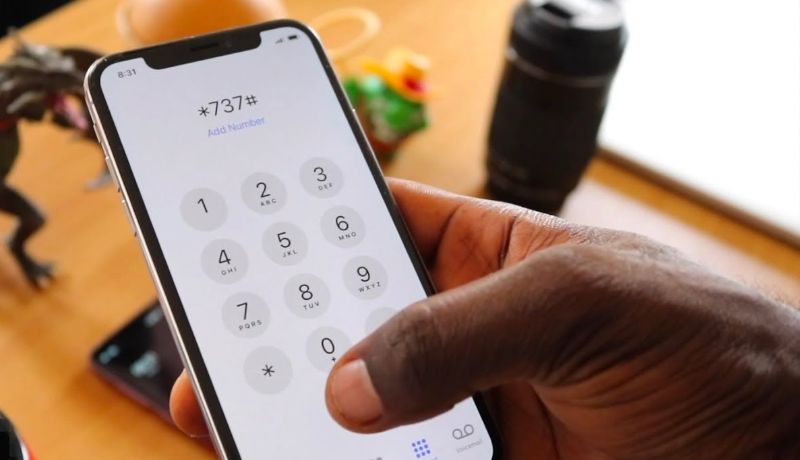
Even in the age of AI and modern apps, over 70–80% of mobile money transactions in West Africa still rely on USSD. When telecom giants like MTN laid down the initial GSM infrastructure across the continent, they built a massive digital highway. Fintech pioneers realized that while smartphones are expensive and data bundles are a luxury, nearly everyone has access to a basic cellular signal. By leveraging USSD, Africa achieved a level of financial inclusion that Western markets are still trying to replicate. It is the ultimate case study of a technology succeeding not by forcing consumers to upgrade, but by meeting them exactly where they are.
The Scale: Processing Half a Million Transactions a Month
To understand the true power of this technology, you have to look at how it performs under pressure. In my own work engineering these systems, I oversaw a high-concurrency USSD infrastructure project in West Africa that scaled to handle over half a million transactions a month smoothly.
Building at this scale means navigating a complex ecosystem where speed and reliability are everything. When a user dials a code, that traffic doesn’t just instantly hit your application. It routes through powerful aggregator networks and gateways—built by infrastructure leaders like Africa’s Talking—whose robust gateways bridge the gap between telecom networks and backend software.
The engineering challenge isn’t about making a flashy interface; it’s about ensuring that when thousands of users hit those gateways simultaneously, your system processes every single request in milliseconds without a single dropped session or data mismatch.
Beyond Banking: From Ghana to East African Chamas
While cross-border fintech gets the most press, USSD has evolved into an essential utility that powers grassroots financial systems and institutional operations across the entire continent.
- The West African Landscape: In Ghana, innovative platforms like Uzo use this exact infrastructure to simplify digital interactions and bring essential utilities directly to users’ feature phones, completely bypassing the need for internet access.
- The East African Revolution: Over in Kenya, USSD has completely revolutionized local microfinance. Traditional Chamas (informal investment groups) and local micro-credit institutions use simple text menus to automate group contributions, track loans, and manage payouts instantly.
- NGOs and Institutional Surveys: Because it requires zero internet data, international organizations and local NGOs routinely deploy USSD for remote data collection. Whether conducting health surveys or tracking agricultural metrics in areas with zero 3G or 4G coverage, citizens rely on these menus to send critical data directly to centralized servers.
- Banking Offline Fallback: Even top-tier commercial banks treat USSD as their critical safety net. When data networks go down, the USSD menu serves as the core fallback system, ensuring citizens are never locked out of their money.
The Technical Reality: Engineering for Strict Reliability
From a system design perspective, building for USSD is a unique challenge because you are designing for high volatility. Unlike a mobile app that can locally cache data if a network drops, a USSD session will timeout aggressively if your server lags by even a couple of seconds.
The core challenge is handling thousands of real-time webhooks, maintaining strict transaction states, and ensuring zero data loss—all without a reliable internet layer on the user’s end. Your architecture must be fast, optimized, and built to scale horizontally from handling a few hundred users to hundreds of thousands without blinking.
Looking to Build or Scale Your USSD Infrastructure?
Whether you are a commercial bank expanding offline accessibility, an NGO deploying remote data collection tools, or a fintech platform scaling up to handle high-concurrency telco webhooks, system design is everything.
If you need a reliable, high-performance system related to USSD architecture—contact me to discuss how we can build it cleanly.